


The United States Patent and Trademark Office (USPTO) recently held a “USPTO Hour” session regarding the updated patent interview practice. Hosted by the Office of the Commissioner for Patents, the session featured Assistant Commissioner Daniel Ryman and Technology Center 1700 Director Bonnie Eyler. The presentation clarified impending administrative changes regarding how examiners are credited time for interviews, while simultaneously reinforcing the agency’s long-standing position that interviews are vital for compact prosecution.
The Shift in Examiner “Attribute Time”
A primary focus of the presentation concerned administrative adjustments to “attribute time”—the non-production time allotted to examiners for conducting interviews. Historically, examiners received an automatic one-hour credit upon entering an interview summary.
However, Director Eyler noted that internal reviews revealed “inefficiencies associated with the automatic grant of interview time,” such as examiners receiving full credit for brief phone calls regarding grammatical errors.
To address these “unintended consequences,” the USPTO is implementing a change for Fiscal Year 2026. While examiners will still automatically receive one hour of attribute time for the first interview in a new case or a newly filed Request for Continued Examination (RCE), subsequent interviews will require supervisory approval.
Director Eyler emphasized that this is a time-accounting correction, not a policy shift against interviews:
“Interviews continue to be highly encouraged... that time just needs to be approved by a supervisor”
Background: Clarification was Definitely Needed
Following the initial announcement in October of the USPTO’s presentation on its Fiscal Year 2026 (FY26) Performance Appraisal Plan (PAP), concern rippled through the patent bar that the requirement for supervisory approval effectively signaled a “soft ban” on second interviews.
Deputy Commissioner for Patents, Jerry Lorengo, addressed this potential confusion directly in a recent interview on the Clause 8 podcast with Eli Mazour.
Lorengo clarified that the adjustment to “1 hour per new application or RCE” (previous slides, p. 25) is intended not to discourage legitimate prosecution discussions but to address “specific outliers” where the system was being abused.
Like the USPTO Hour presentation, Deputy Commissioner Lorengo was emphatic that the policy should not deter communication, stating: “Always call the examiner for an interview.”
Productive Interviews
Assistant Commissioner Ryman outlined strategies for applicants to ensure interviews are granted and conducted effectively.
He highlighted that interviews are most effective after a first office action or after a final rejection to “clarify positions for appeal” or place the application in condition for allowance.
Ryman strongly advocated for the use of the Automated Interview Request (AIR) form, describing it as a “convenient, web-based tool” that streamlines the scheduling process.
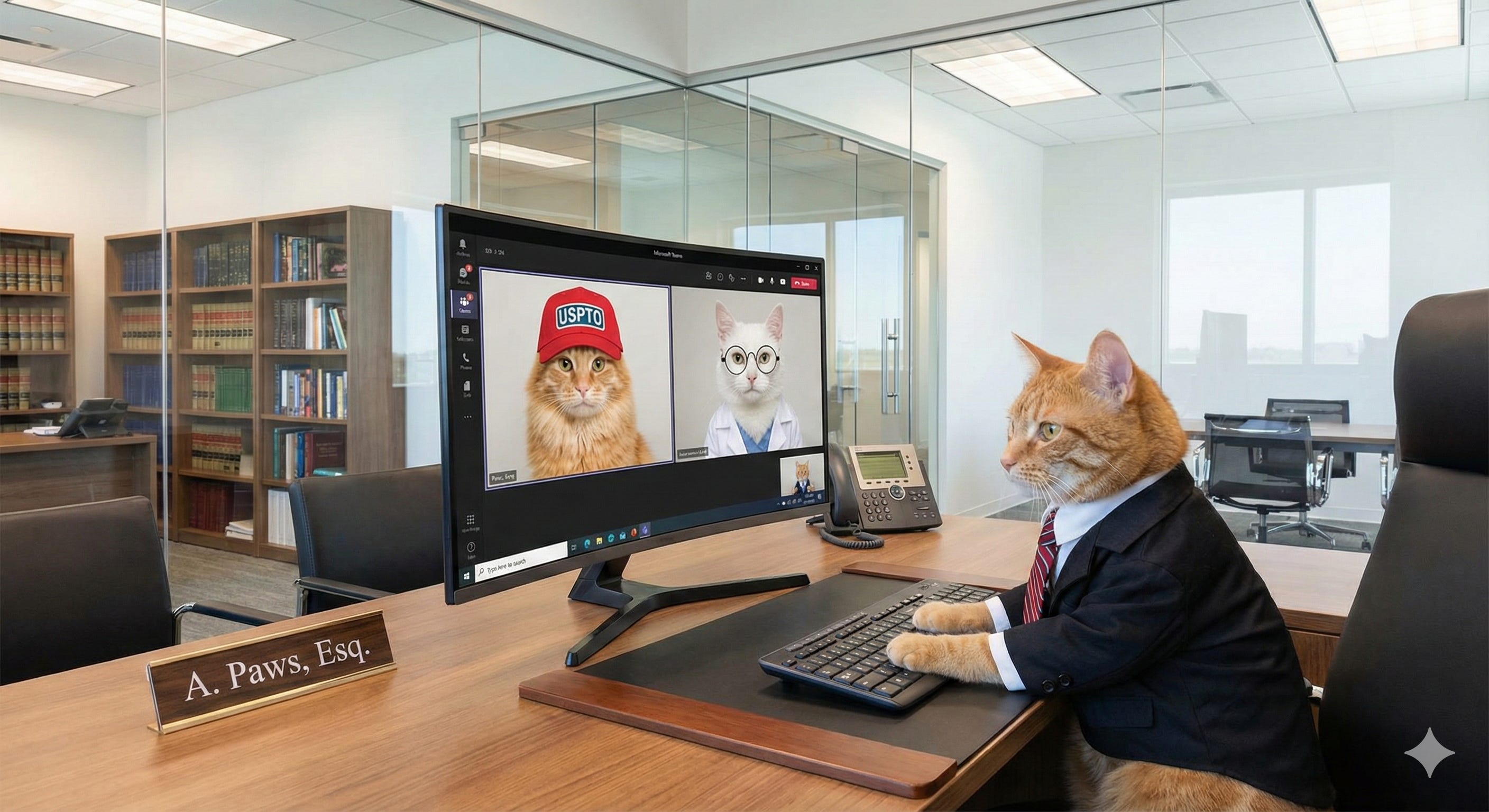
Furthermore, the Office is pushing for video conferencing over telephonic interviews.
“I did want to highlight the importance of video conferencing. This does allow face-to-face collaboration, no matter the location of the parties. It does facilitate sharing and real-time editing of documents” (Ryman, Transcript).
The Critical Role of the Agenda
Both speakers stressed that a specific agenda is paramount. A vague request may lead to a denial, or worse, an unproductive session. Ryman noted that as an examiner, he witnessed attorneys who would “rehash argument that were already in the record,” which he described as “not necessarily productive use of our time.”
Deputy Commissioner Lorengo had previously emphasized “agendas” as how practitioners can ensure their requests for subsequent interviews are approved. The “key information” an examiner needs to justify the time to their supervisor is “a really good agenda from the attorney.”
If the agenda demonstrates substance, Lorengo stated that his expectation for supervisors is clear:
“Supervisors should approach that and be reasonable... in general should be saying yes.”
Providing this document well in advance allows the examiner to prepare adequately.
If an agenda is sent only a day prior, Ryman suggested it might be best to reschedule to ensure the examiner has reviewed the materials.
Best Practices for Approval
Assistant Commissioner Daniel Ryman provided specific tactical advice during the webinar to align with this “good agenda” requirement. He warned against using interviews to “rehash argument that were already in the record,” noting that such meetings are “not necessarily productive use of our time.”
To maximize the likelihood of a productive session, Ryman and Eyler recommended:
Use the Automated Interview Request (AIR) Form: A “convenient, web-based tool” that logs the request formally.
Video Conferencing: Ryman highlighted that video allows for “face-to-face collaboration” and “real-time editing of documents.”
Specific Agendas: Cite specific claim limitations and paragraph numbers. Vague agendas make it difficult for examiners to justify the time to a supervisor.
Notable Q&A Insights
The Question and Answer segment provided clarity on several practical scenarios:
RCE Resets the Clock: When asked if an RCE counts as a “new” application for the purpose of the automatic time grant, Eyler confirmed: “Once an RCE is filed, that case is considered new again... that automatic grant will reset.”
Demonstratives: One attendee asked if they could show a video or 3D prototype of an invention during a video interview. Eyler’s response was enthusiastic: “My first response to that is cool! Sure!” Ryman added that this effectively replicates the old practice of bringing physical prototypes to the USPTO campus.
Denials: If an interview is denied, applicants are encouraged to contact the examiner’s supervisor (SPE). Ryman stated that if a second request “moves prosecution forward,” it should generally be granted.
Thoughts & Analysis
The confusion around the “second” interview policy was concerning for applicants, examiners, and practitioners. There were accounts of examiners flatly rejecting requests for after-final interviews due to the confusion (and politics, probably).
Patent agents and attorneys were outraged at the apparent one-and-done rule, especially considering Director John Squire’s inaugural remarks about the examiners being “seasoned negotiators.”
Things look better, now, with more clarity about the agenda being the key to unlock a second interview.
The USPTO’s push toward video conferencing offers a tangible benefit for complex prosecutions. The ability to share screens and edit claims in real-time, as Ryman suggested, can resolve § 112 issues more rapidly than written correspondence. Furthermore, the clarification that RCEs reset the “automatic” interview hour provides certainty for practitioners mapping out prosecution budgets and timelines.
The requirement for SPE approval on second interviews introduces an administrative hurdle. While the USPTO insists interviews are encouraged, the extra layer of bureaucracy could create friction.
Examiners may be hesitant to request additional time from supervisors for, e.g., borderline cases, potentially leading to fewer follow-up discussions that could otherwise resolve minor issues.
There is a risk of inconsistency in how different Art Units apply the “substantive” standard for granting second interviews. If supervisors become gatekeepers to manage production hours strictly, applicants might face increased denials for subsequent interviews.
Additionally, while the Office encourages video tools, practitioners must remain vigilant about security and record-keeping. As with any digital communication, ensuring that what happens on the screen is accurately reflected in the written Interview Summary is critical to preserving the prosecution history and minimizing claims of estoppel later in litigation. Recording interviews is not permitted.
Conclusion
The USPTO remains outwardly optimistic about the role of interviews in patent prosecution. The message to outside stakeholders seems clear: use the AIR form, request video (camera on), and send a detailed agenda.
However, practitioners should be aware of the internal tightening regarding time credits. While the first interview remains standard, securing a second specifically requires demonstrating that the interaction will materially advance prosecution. How high that bar is—for each art unit, examiner, SPE, etc.—will need to be watched over time.
The initial confusion, mostly from examiners, about second interviews should have been expected. Their skepticism is rooted in the perceived actions against them such as the proposed dissolution of their union (POPA) and other significant changes to the Patent Examiner Performance Appraisal Plan (PAP) for Fiscal Year 2026.
Having a webinar to encourage agendas feels like applying a small band aid to a compound-fractured relationship.
Practitioners and examiners will likely need to bring patience to the entire interview process for the time being.
Disclaimer: This is provided for informational purposes only and does not constitute legal or financial advice. To the extent there are any opinions in this article, they are the author’s alone and do not represent the beliefs of his firm or clients. The strategies expressed are purely speculation based on publicly available information. The information expressed is subject to change at any time and should be checked for completeness, accuracy and current applicability. For advice, consult a suitably licensed attorney and/or patent professional.