


The United States Patent and Trademark Office recently issued a federal notice regarding information collection 0651-0012, titled “Agency Information Collection Activities; Submission to the Office of Management and Budget for Review and Approval; Comment Request; Admission To Practice and Roster of Registered Patent Attorneys and Agents Admitted To Practice Before the United States Patent and Trademark Office.” (p. 1)
On its face, this notice represents a mandatory administrative check-in under the Paperwork Reduction Act. The agency must periodically ask the public to evaluate the time and financial burdens associated with its standard forms.
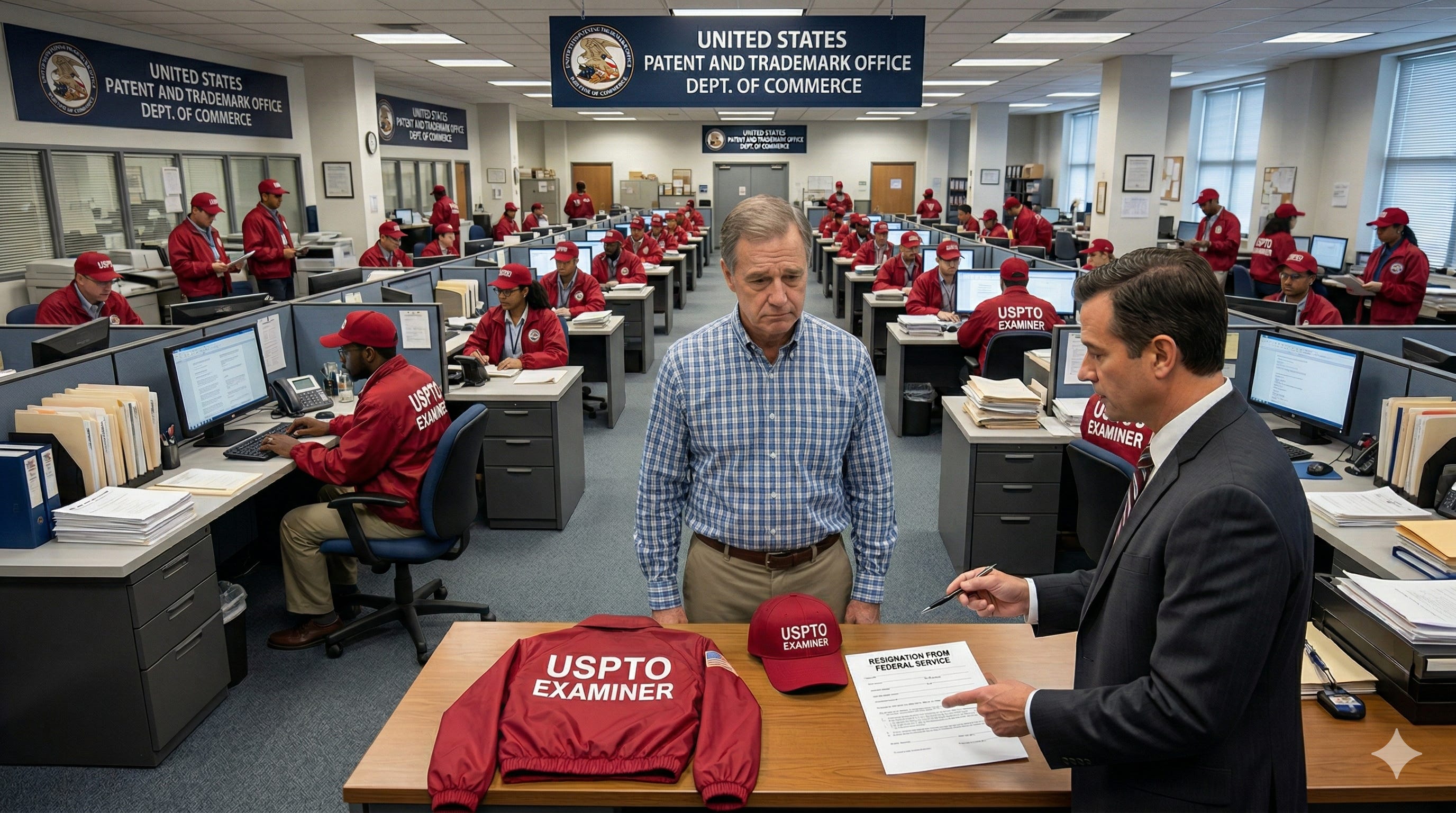
While the notice appears routine, the specific changes highlight two immediate regulatory priorities: reaffirming conflict of interest policies as patent examiners transition into private practice and monitoring for potential fraud through misuse of practitioner status.
Examiner Attrition and Conflicts of Interest
The patent profession is observing a notable demographic shift at the USPTO. Due to shifting federal policies, union restructuring, and potential reductions in force, numerous patent examiners are leaving the agency to join industry, private law firms, or in-house corporate teams. This not-so-insignificant exodus seemingly necessitates strict ethical oversight to protect the integrity of the patent prosecution process.
The current information collection introduces a targeted mechanism to address this transition.
“The USPTO is adding an item (Item 6-Undertaking Under 37 CFR 11.10(b)) to this information collection.” (p. 1) This new addition, form PTO-275, directly targets former agency employees.
The regulation at 37 CFR 11.10(b) restricts former USPTO employees from prosecuting patents or representing clients in matters where they had personal and substantial involvement during their government tenure.
Recent enforcement actions highlight the severity of similar ethical breaches, with the Department of Justice securing significant settlements from former examiners. In early 2026, two examiners agreed to pay $500,000 and $122,480, respectively, in civil penalties to resolve allegations of examining patent applications for companies in which they held disqualifying financial interests.
Responding to these specific breaches, USPTO Director John A. Squires issued a memorandum on March 2, 2026, imposing a strict zero-dollar financial threshold for recusal. This new directive eliminates the previous $15,000 de minimis exemption, directing any employee who determines the scope of patent rights to affirmatively recuse themselves from applications where they hold any stock or bonds in the applicant.
By requiring former examiners to formally sign this new form, the Office of Enrollment and Discipline establishes a documented agreement regarding ethical boundaries. The agency uses this signed form to “determine the qualifications of individuals entitled to represent applicants before the USPTO”. (p. 1)
This proactive measure aims to guard against the improper use of insider knowledge and establishes a clear paper trail of professional accountability.
Maintaining the Human Roster
Beyond tracking former examiners, the routine data collection serves as a continuous verification of the active patent bar. Practitioners must regularly submit the “Data Sheet-Register of Patent Attorneys and Agents PTO-107A” to update their status. (p. 1)
The agency leverages this data to “administer and maintain the public roster of attorneys and agents registered to practice before the USPTO, which is accessible through the USPTO website.” (p. 1)
This persistent administrative hurdle provides a baseline defense against algorithmic interference. Recent industry observations note the risk of non-attorneys employing generative artificial intelligence to draft and mass-file patent applications. The statute “permits the USPTO to require information from applicants that shows that they are of good moral character and reputation”. (p. 1)
By demanding human validation through forms like the “Oath or Declaration” (PTO-1209), the agency mandates human accountability for every filing. (p. 1) If an automated tool attempts to submit a document under a fictitious or falsified identity, the absence of that identity on the maintained Register triggers an administrative flag, providing a mechanism for inventors to confirm their representative’s legitimacy.
Likewise, if an individual employs artificial intelligence to abuse the filing process, the Office of Enrollment and Discipline relies on this updated data to locate the responsible party and send necessary letters of investigation or formal sanctions.
This persistent verification process protects against another specific vulnerability: the hijacking of inactive credentials. A bad actor utilizing automated mass-filing tools might attempt to bypass system filters by co-opting the registration number of a retired or deceased practitioner.
By mandating active, human-verified status updates, the agency can flag inactive registration numbers and prevent artificial intelligence from operating under the guise of former attorneys.
Thoughts and Considerations
Practitioners evaluating this updated information collection should weigh the administrative realities of the agency’s requirements.
The formal requirement for former examiners to sign form PTO-275 provides clear ethical boundaries, protecting pending patent applications from potential conflicts of interest.
Furthermore, the methodical identity verification process protects the patent system from unauthorized automated practice. The information collection guarantees that vetted human actors handle sensitive intellectual property matters.
The strict administrative requirements place a measurable burden on active patent attorneys and agents. The agency calculates an “Estimated Total Annual Respondent Hourly Cost Burden: $1,236,849” across the profession. (p. 2) Practitioners face recurring obligations to submit updated data sheets, respond to agency inquiries, and pay associated fees.
For example, the notice lists an estimated 3,293 respondents completing the application for registration, taking 30 minutes each. (p. 2) Submitting a “Reinstatement to the Register” requires a $226 fee. (p. 3)
Former examiners face severe professional consequences if they violate the terms of the new undertaking form.
Additionally, the reliance on public records creates specific vulnerabilities regarding data privacy. The agency states that “All comments submitted in response to this notice are a matter of public record” and warns that “the entire comment-including PII-may be made publicly available at any time.” (p. 3)
Active practitioners communicating with the Office of Enrollment and Discipline must scrutinize their submissions to avoid exposing sensitive personal or client information.
Concluding Thoughts
The revised information collection functions as both a routine paperwork audit and a timely enforcement mechanism. By introducing the formal undertaking for former employees, the agency establishes necessary guardrails for a shifting patent workforce.
Following recent Department of Justice settlements regarding examiner financial conflicts and the USPTO Director’s strict zero-dollar recusal threshold, this documented accountability is a necessary safeguard. Furthermore, maintaining the verified human roster provides an active defense against the unauthorized practice of law by artificial intelligence.
By mandating routine status updates, the Office of Enrollment and Discipline can effectively monitor the Register, ensuring bad actors do not use automated tools to hijack the credentials of retired or deceased practitioners. These administrative measures protect the structural integrity of the patent prosecution process.
Disclaimer: This is provided for informational purposes only and does not constitute legal or financial advice. To the extent there are any opinions in this article, they are the author’s alone and do not represent the beliefs of his firm or clients. The strategies expressed are purely speculation based on publicly available information. The information expressed is subject to change at any time and should be checked for completeness, accuracy and current applicability. For advice, consult a suitably licensed attorney and/or patent professional.