


The United States Patent and Trademark Office announced on March 23, 2026, a significant extension of the Access to Relevant Prior Art (RPA) Initiative. The RPA Initiative functions as an experiment with the goal to “provide examiners with information (e.g. prior art, search reports, etc.) from applicant’s other applications” (Access to Relevant Prior Art Initiative, ¶ 3).
The targeted applications typically “have the same or substantially the same disclosure (e.g., domestic parent and counterpart foreign applications) as the U.S. application being examined” (RPA Initiative, ¶ 3).
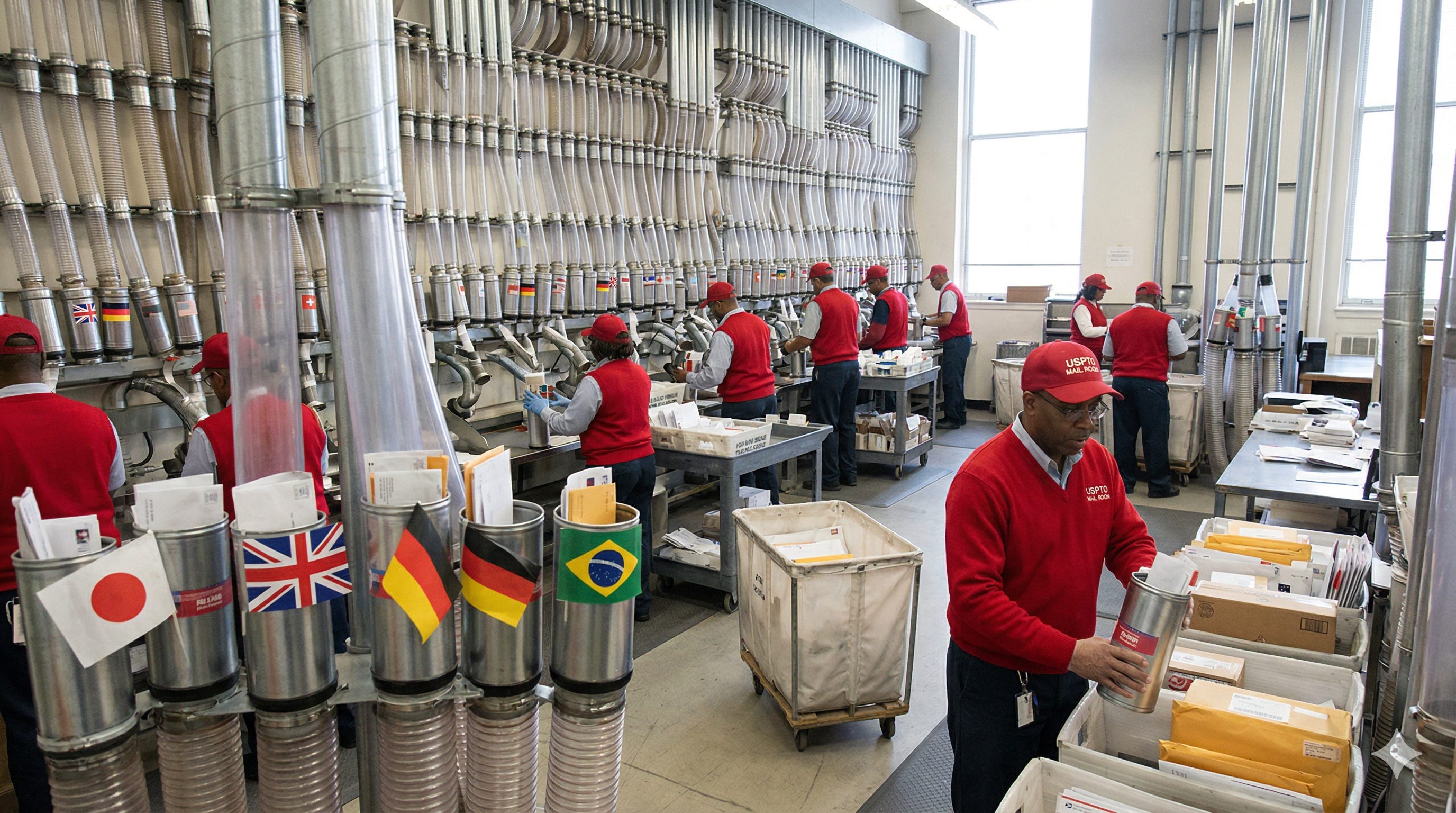
The extension broadens the program to include one workgroup in each Technology Center, encompassing 61 distinct art units. The Office expects quarterly additions to the program throughout calendar year 2026.
Overview of the RPA Initiative
The core mechanism of the RPA Initiative seeks to leverage existing electronic resources to improve examiner access to relevant information from related applications.
These electronic resources include related U.S. applications, such as continuations and divisional applications claiming benefit under 35 U.S.C. 120 or 121, alongside international applications filed under the Patent Cooperation Treaty, and counterpart foreign applications.
The current Phase 1 focuses exclusively on importing references from an immediate U.S. parent application into a continuing or divisional application. Future phases will incorporate the foreign and international data.
The automated interface aims to equip examiners with a master reference list. This list contains references cited in the instant application alongside imported references from immediate U.S. parent applications. The user interface reportedly allows examiners to filter the reference list and create search strings of U.S. patent documents for use in other search systems.
Historical Context and Program Development
The program originated in fiscal year 2019 following a targeted release in late 2018. The Office gathered user feedback via a Federal Register Notice published in August 2016 and a public roundtable on September 28, 2016.
Initial efforts reportedly received positive feedback from patent applicants and examiners. Resource constraints limited broader implementation until the deployment of a new automated tool.
Research and evaluation preceded the development of this tool. The Office evaluated the potential to import information from existing electronic platforms. The evaluation included Global Dossier, the Common Citation Document, the World Intellectual Property Organization’s PatentScope, and internal information technology systems. The Office developed specific functionality to provide notice to the applicant regarding the relevant information and references imported and considered by the examiner.
Mechanics of Automated Importation
Based on the USPTO’s RPA website and FAQ, the Office determines whether an application meets the conditions for inclusion after the Office of Patent Application Processing completes pre-examination processing. This determination requires the issuance of a filing receipt, the absence of outstanding pre-examination notices, and the completion of classification.
If an application receives a Notice to File Missing Parts for missing fees or an inventor’s oath, the RPA inclusion determination pauses until the applicant remedies the defect.
Once the application meets these conditions, the system executes a single importation of citations from the parent application. The citations encompass U.S. patent documents, foreign patent documents, and non-patent literature contained on an Information Disclosure Statement listing, such as form PTO/SB/08, or a PTO-892 form in the file wrapper record of the parent application.
Applicants receive a Notice of Imported Citations listing the references transferred into the continuing application. The Office specifies that “there is no requirement to respond to the Notice of Imported Citations” (FAQ, ¶ 28). The automated importation occurs behind the scenes. This shifts the initial administrative burden of cross-citing references from the practitioner to the agency’s internal software.
Procedural Requirements for Inclusion
According to the FAQ, Specific criteria must be satisfied for an application to qualify for Phase 1 of the program.
Application Type: The application must be a non-reissue, non-provisional application filed under 35 U.S.C. 111(a).
Priority Claim: The application must contain a claim for benefit under 35 U.S.C. 120 or 121 of only a single prior U.S. parent application filed under 35 U.S.C. 111(a) or entered into the national stage under 35 U.S.C. 371. The parent application can claim priority of other applications only under 35 U.S.C. 119.
Timing: The claim for benefit must be reflected on the filing receipt before the application completes pre-examination processing.
The inclusion criteria restrict the scope of the initial phase. The exclusion of applications claiming priority to multiple U.S. parents prevents the system from managing conflicting citation lists during this early stage.
Reissue applications and provisional applications remain entirely outside the scope of this automated importation. The requirement that the priority claim exist on the filing receipt before pre-examination processing completes forces practitioners to perfect priority claims at the time of initial filing. Correcting a priority claim later in prosecution bypasses the automated importation trigger. This forces the applicant back into manual reporting procedures.
Affected Technology Centers and Art Units
The March 2026 extension includes a diverse array of technical fields. Intellectual property professionals operating in these sectors must adapt docketing procedures accordingly.
Technology Center 1600 (Biotechnology and Organic Chemistry): Participating art units 1611 through 1619 examine patents covering drugs, bio-affecting compositions, plant-protecting compositions, cosmetics, and in-vivo diagnostic agents. Pharmaceutical patent prosecutors handling large patent families will likely observe immediate impacts on continuing application strategies.
Technology Center 1700 (Chemical and Materials Engineering): Art units 1731 through 1738 handle applications for coatings, plastics, ceramics, metallurgy, catalysts, and alloys. Patent practitioners practicing in materials science will see automated prior art citations affecting applications in these units.
Technology Center 2100 (Computer Architecture and Software): Art units 2132, 2133, 2135, 2137, 2138, and 2139 focus on hardware memory, databases, artificial intelligence, error detection, and software development. Software patent practitioners frequently utilize continuing applications to capture evolving commercial embodiments. This makes the inclusion of these units highly relevant for tech-focused portfolios.
Technology Center 2400 (Computer Networks and Security): Art units 2431 through 2439 process patents involving cybersecurity, encryption, secure network communications, and information security protocols.
Technology Center 2600 (Communications): Art units 2610 through 2616, 2618, and 2619 are dedicated to computer graphics processing, 3D animation, image analysis, display attributes, and structural modeling. Telecommunications and hardware companies hold significant volumes of pending applications in these units.
Technology Center 2800 (Semiconductors and Optical Systems): Art units 2871, 2872, 2875, 2876, 2877, and 2878 review liquid crystal cells, optical waveguides, general optical systems, and active solid-state devices.
Technology Center 2900 (Designs): Art units 2961 through 2964 handle the aesthetic and ornamental design aspects of manufactured products. Design patent practitioners must recognize that the RPA Initiative applies here.
Technology Center 3600 (Transportation and Construction): Art units 3631 through 3637 review mechanical and structural patents covering supports, racks, joints, connections, and cabinet structures.
Technology Center 3700 (Mechanical Engineering and Manufacturing): Art units 3752 through 3754 specialize in fluid sprinkling, spraying, diffusing, coating apparatuses, valves, and fire extinguishing systems.
Duty of Disclosure and Legal Implications
The initiative directly interacts with the duty of disclosure under 37 CFR 1.56. The Office states that an applicant’s duty to disclose information in the continuing application “will continue to be satisfied for information considered in the parent application and will be satisfied for any additional information made of record by the Office in the continuing application” (FAQ, ¶ 11).
Compliance with 37 CFR 1.98 in the parent application serves as a strict prerequisite for the examiner’s consideration of the imported documents. If a reference suffered from a procedural defect in the parent application, that defect prevents the automatic consideration of the document in the continuing application. Examples of procedural defects include a missing English translation for a foreign document or an omitted non-patent literature copy. The examiner informs the applicant in the first Office action of the reasons a citation was not considered.
The examiner indicates consideration by signing a Notice of Consideration. All citations imported from the parent application and indicated as considered will be printed on the issuing patent. The Office marks these specific citations with a double-dagger (“‡”) on the patent face to distinguish them from other citations of record.
If an applicant notices one or more citations from the parent application have not been imported, specific actions apply. To have these citations printed on the face of the continuing application, the applicant must submit them on an Information Disclosure Statement. Otherwise, the examiner will still consider the documents corresponding to these citations that have not been imported in accordance with MPEP 609.02.
MPEP 609.02 requires examiners to review the parent application’s file wrapper, but manual submission guarantees printing on the final patent.
Benefits, Challenges, and Risks
The automated importation of prior art offers tangible advantages for patent practitioners and intellectual property owners. The system “Simplifies application process for applicant” and “Speeds up examination process” (RPA Initiative, ¶ 2-3). The availability of a master reference list early in the examination process supports higher quality initial search results and “Improves prosecution quality” (RPA Initiative, ¶ 5).
The current iteration of the program features specific structural limitations requiring careful attention. The Office explicitly states, “In the first phase of the RPA initiative, the Office will perform only a single importation of citations from the patent application” (FAQ, ¶ 19).
Any citations appearing in the parent application after this single importation event will not transfer automatically. Practitioners face the ongoing challenge of tracking parallel prosecution timelines across multiple active matters.
If an examiner cites new art in a parent application after the continuing application has passed pre-examination processing, the applicant must submit a manual Information Disclosure Statement with the later-appearing citations in compliance with 37 CFR 1.97 and 1.98 in the continuing application.
A failure to manually cross-cite later-appearing art from a parent application into a continuing application exposes the resulting patent to allegations of inequitable conduct during future litigation.
Inequitable conduct claims pose a severe threat to patent validity. Courts hold inventors and legal representatives to strict standards of candor. If a practitioner assumes the RPA Initiative imported a highly relevant piece of prior art from a parent case, but a technical glitch prevented the transfer, the resulting patent might face unenforceability claims during enforcement proceedings.
The burden of proof remains on the patent owner to demonstrate compliance with 37 CFR 1.56. The USPTO’s automated tool acts as an administrative aid, not an indemnity against legal malpractice or failure to disclose material information.
Another risk is that automated data transfer systems occasionally experience technical failures. A cautious approach dictates that law firms and corporate legal departments maintain strict internal docketing procedures to audit the Office’s automated importations against internal records.
Complete reliance on an external automated system for legal compliance presents an unacceptable risk profile for sophisticated intellectual property operations. A prudent risk management strategy likely involves treating the Notice of Imported Citations as a secondary verification tool rather than a primary docketing mechanism.
It may be considered best practice for practitioners to systematically compare the Notice of Imported Citations against the parent application’s file history to identify dropped references or unconsidered non-patent literature.
Future Program Phases
The Office plans future phases to focus on importing from additional sources. These sources include counterpart foreign and international applications. Future updates will provide examiners access to text-searchable copies of documents within the master reference list.
The Office anticipates quarterly additions to participating art units throughout the remainder of calendar year 2026. Patent professionals should monitor the RPA Initiative webpage for updates regarding newly participating art units and adjust filing strategies accordingly.
Positioning relevant prior art before examiners earlier in prosecution offers clear advantages. Director Squires frequently points to thorough initial examinations as a basis for denying post-grant administrative procedures.
Issuing valid claims initially becomes more attainable when the most pertinent references from related matters surface immediately.
A lingering question involves how these procedures might alter when the USPTO or counterpart foreign patent offices deploy artificial intelligence tools to identify prior art.
For instance, if Country J employs an automated AI search in its native language immediately upon receipt of an application and payment of fees, prior to the USPTO assigning an examiner, how will these systems categorize the influx of results? The burden might shift heavily onto U.S. examiners to manually review each of those AI-found and potentially machine-translated references.
Such technological adjustments will demand strict audits regarding the relevancy of results, the timing of disclosures, and the accuracy of machine translations. Still, the underlying objective to share the most pertinent references across jurisdictions and quickly locate the best art remains admirable and efficient.
Disclaimer: This is provided for informational purposes only and does not constitute legal or financial advice. To the extent there are any opinions in this article, they are the author’s alone and do not represent the beliefs of his firm or clients. The strategies expressed are purely speculation based on publicly available information. The information expressed is subject to change at any time and should be checked for completeness, accuracy and current applicability. For advice, consult a suitably licensed attorney and/or patent professional.