


The United States Patent and Trademark Office appears to be currently operating without recognized unions for its examiners and IT professionals following recent executive orders and a new appellate order.
The Patent Office Professional Association (POPA) and the National Treasury Employees Union Chapter 243 were decertified based on alleged national security determinations. On February 26, 2026, the United States Court of Appeals for the Ninth Circuit vacated a preliminary injunction that had temporarily blocked the enforcement of these exclusions across the federal government.
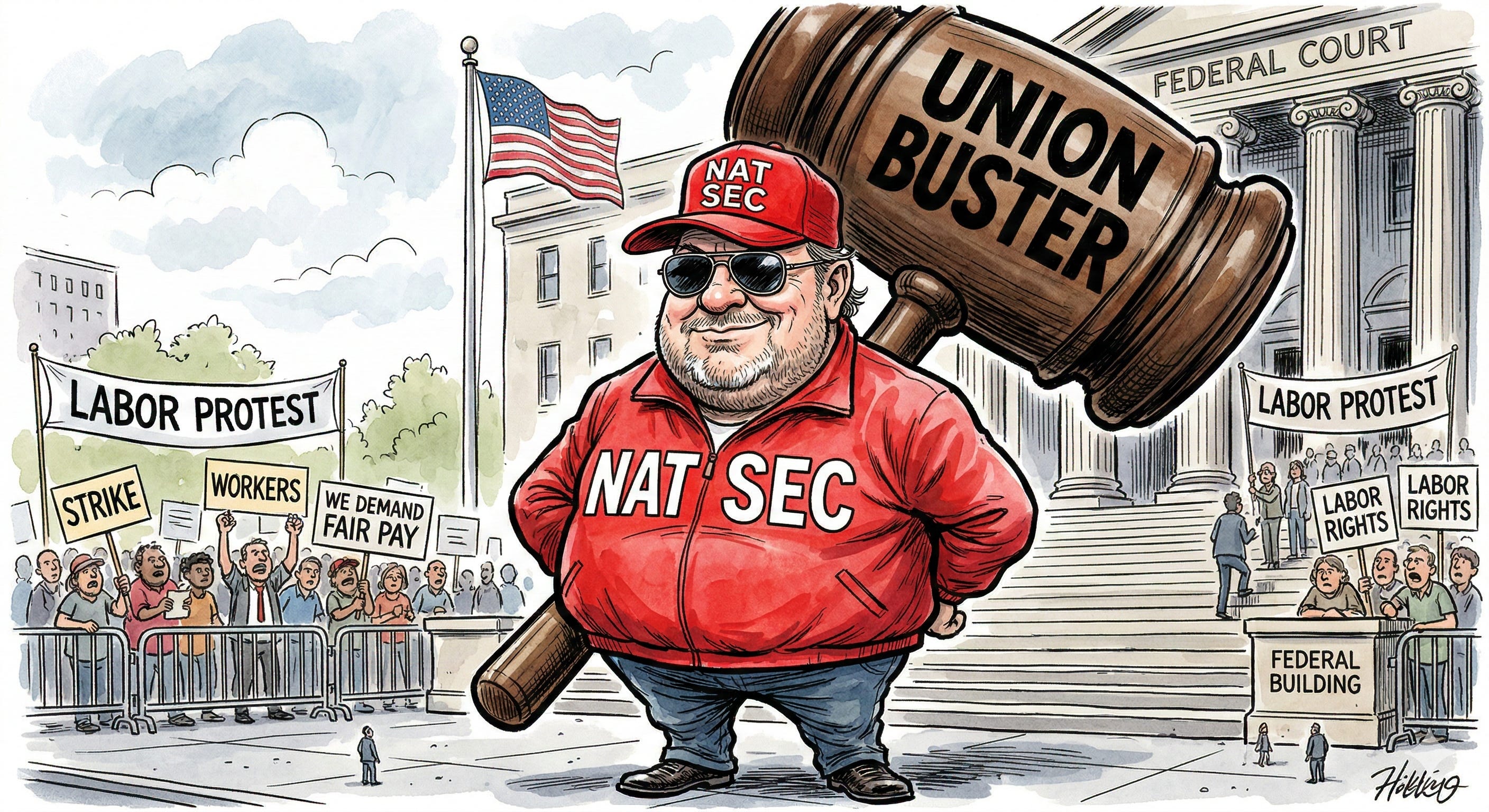
This appellate ruling in Am. Fed. of Gov’t Employees v. Trump establishes a legal hurdle directly affecting the Patent Office Professional Association. The administration previously determined that the Patents business unit and the Office of the Chief Information Officer possess “as a primary function ... national security work.”
In August, when the exclusions were first announced, Deputy Under Secretary of Commerce for Intellectual Property Coke Morgan Stewart circulated a communication confirming that the federal labor statute cannot be applied to these units “in a manner consistent with national security requirements and consideration.”
That presidential order triggered a lengthy procedural history: affected unions filed a lawsuit, successfully secured a preliminary injunction to halt the decertification, and the government subsequently appealed.
Now, with the Ninth Circuit vacating that preliminary injunction, the administration’s initial directive takes effect, and employees in these units will no longer officially represented by unions, unless further legal action is successful.

Background and Procedure
Executive Order 14,251 and the subsequent Executive Order 14,343 excluded specific federal agencies and subdivisions from collective bargaining requirements. The Federal Service Labor-Management Relations Statute protects the rights of federal employees to organize.
The statute resides within Title VII of the Civil Service Reform Act of 1978 and Chapter 71 of Title 5 of the U.S. Code (p. 11). Congress explicitly exempted several federal agencies from coverage, including the Federal Bureau of Investigation, the Government Accountability Office, and the Central Intelligence Agency (p. 12).
The statute permits the President to exempt additional agencies from coverage based on national security considerations (p. 12). According to the opinion, every President except President Biden, since 1978, has signed executive orders that exclude designated agency subdivisions from the labor statute (p. 13).

A coalition of unions representing hundreds of thousands of federal civilian employees sued the President and other federal defendants, alleging that Executive Order 14,251 constituted First Amendment retaliation.
A district court in California issued a preliminary injunction against the executive order based entirely on the First Amendment retaliation claim (p. 15).
The district court found a serious question regarding whether the administration retaliated against unions for publicly criticizing the administration (p. 15).
The government argued that labor groups must pursue their claims before the Federal Labor Relations Authority. The appellate panel agreed with the unions that federal courts possess jurisdiction to hear the complaint immediately. The panel ruled that the executive order excluded the employees from Chapter 71 coverage, placing the claims outside the scope of the Federal Labor Relations Authority (p. 18).
The Ninth Circuit reviewed the retaliation claims and vacated the injunction (p. 26). The appellate panel determined that the plaintiffs had not demonstrated a likelihood of success on the merits (p. 19). The panel applied a legal standard where the burden shifts to the defendant official to demonstrate that the action would have been taken without the impetus to retaliate (p. 19).
The panel held that the government demonstrated the President would have taken the same action absent the protected conduct (p. 20). The court noted that Executive Order 14,251 discloses no retaliatory animus on its face and expresses a primary concern that union activity interferes with national security (p. 20).
The panel concluded that the executive order possesses a legitimate grounding in national security concerns (p. 22).
This unanimous appellate decision is limited to the First Amendment issue and does not represent a final judgment on the underlying legality of the executive actions (pp. 26-27).
The Ninth Circuit panel solely addressed whether the trial court’s temporary halt should persist during the ongoing lawsuit. Specifically, the court noted that it was not deciding whether the administration acted beyond its delegated authority in issuing the directives (p. 23).
What’s Next for POPA?
The preliminary injunction was vacated, but the litigation is far from over. As noted in a concurring opinion, the review of a preliminary injunction provides “little guidance as to the appropriate disposition on the merits” (pp. 26-27).
The Patent Office Professional Association and other unions may still challenge the executive order at a full trial.

The unions face a significant burden to develop a factual record proving that retaliatory animus was the actual but-for cause of the exclusion, but the opportunity to litigate the merits remains available (p. 26).
Further Thoughts
Challenges:
Transition: The sudden invalidation of the collective bargaining agreement leaves an operational vacuum. Management and employees must adapt to a completely new relationship structure.
Policy Establishment: Management must establish new frameworks for performance metrics, telework eligibility, and grievance procedures without an established negotiation mechanism.
Risks:
Examiner Retention: Removing union representation may negatively impact the morale of highly specialized patent examiners. Reduced morale could prompt experienced personnel to leave the agency for the private sector.
Patent Quality and Backlog: A loss of senior examiners would directly affect the quality of patent examination. Examining intricate technologies requires experienced talent, and increased turnover could exacerbate the existing patent application backlog.
Institutional Instability: Affected unions may continue to pursue legal remedies in other jurisdictions. This litigation could lead to prolonged institutional instability for the agency.
Conclusion
The Ninth Circuit’s ruling reinforces the executive branch’s authority to exclude agencies from collective bargaining based on national security.
This decision limits the viability of First Amendment retaliation claims against such executive orders at the preliminary stage.

Any legal challenge brought by the Patent Office Professional Association claiming retaliatory intent will face the strict standard articulated by the Ninth Circuit.
Patent practitioners should prepare for a period of adjustment as the United States Patent and Trademark Office operates without the Patent Office Professional Association and examiners adjust to any new rules.
Disclaimer: This is provided for informational purposes only and does not constitute legal or financial advice. To the extent there are any opinions in this article, they are the author’s alone and do not represent the beliefs of his firm or clients. The strategies expressed are purely speculation based on publicly available information. The information expressed is subject to change at any time and should be checked for completeness, accuracy and current applicability. For advice, consult a suitably licensed attorney and/or patent professional.