


The line between patent-eligible software innovation and abstract data manipulation remains one of the most contentious boundaries in intellectual property law. On February 9, 2026, the United States Court of Appeals for the Federal Circuit provided further clarity—and a harsh reminder for patent owners—in GoTV Streaming, LLC v. Netflix, Inc., No. 2024-1669 (Fed. Cir., Feb. 9, 2026).
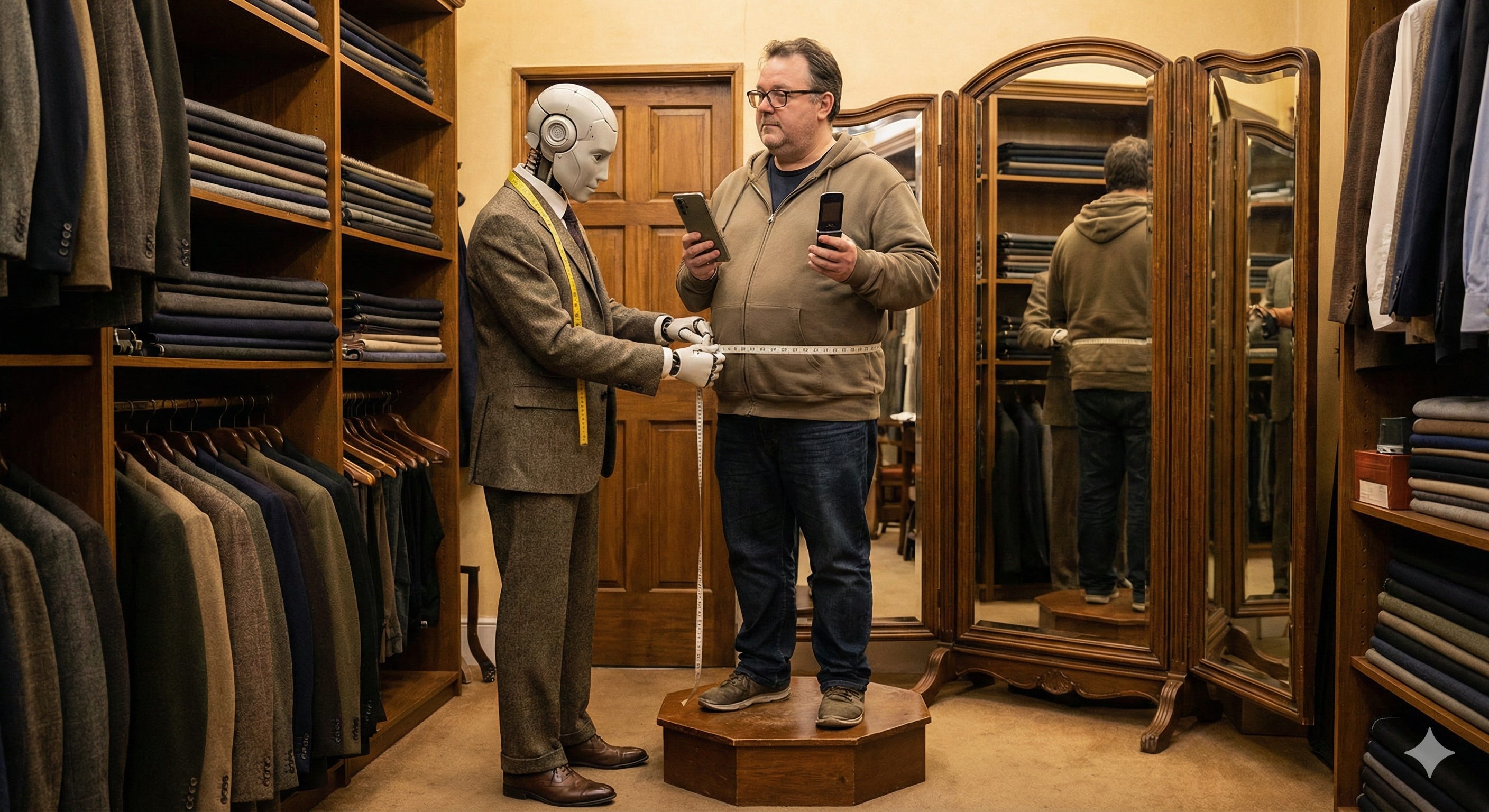
In a decision that wiped out a jury verdict and a $2.5 million damages award, the Federal Circuit held that patents directed to tailoring content for mobile devices are ineligible under 35 U.S.C. § 101.
Despite some glimmers of hope from the USPTO, this appeals court ruling reinforces the reality for the industry: automating manual tasks with generic computer components—no matter how efficient or commercially valuable—remains categorically ineligible for patent protection.

Background of the Dispute
The technology at the center of this dispute addresses a problem familiar to the early mobile era: the fragmentation of device capabilities. As the specification of the asserted patents describes, wireless devices vary wildly in screen size, resolution, and processing power.
Historically, developers might have built applications “from the ground up” for each specific device type, a process that was costly and time-consuming (Slip Op., p. 4).
GoTV Streaming, LLC (GoTV) asserted three related patents against Netflix: U.S. Patent Nos. 8,478,245; 8,989,715; and 8,103,865. These patents share a specification dating back to 2007.
They describe a system where a server receives a request from a wireless device, accesses a “generic” template of content (not specific to any device), and then “tailors” the display specifications to match the requesting device’s capabilities (p. 5). The server sends “rendering commands” to the device, allowing it to display the content properly without the device needing to do the heavy lifting of formatting.
The procedural history of the case is complex. The U.S. District Court for the Central District of California initially dismissed GoTV’s induced infringement claims and, during claim construction, invalidated the ‘865 patent for indefiniteness. However, the district court denied Netflix’s motion to invalidate the claims under § 101. The case proceeded to trial on the remaining claims, resulting in a split verdict: the jury found Netflix infringed the ‘715 patent and awarded $2.5 million in a lump sum (p. 2).
Both parties appealed. GoTV challenged the dismissal of inducement, the indefiniteness ruling, and the admission of certain damages evidence. Netflix filed a cross-appeal, arguing that the district court erred in finding the patents eligible under § 101.
The Court’s Analysis: Unpacking the Central Legal Issue
While the court addressed several issues, the disposition of the case turned entirely on Netflix’s cross-appeal regarding subject matter eligibility. The Federal Circuit reviewed the § 101 determination de novo, applying the two-step framework established in Alice Corp. v. CLS Bank International.
Step One: Directed to an Abstract Idea
The first inquiry under Alice is whether the claims are directed to an abstract idea. GoTV argued that its claims were directed to a specific technical improvement in computer and network functionality—specifically, an “algorithm” and “architecture” for optimizing content delivery (p. 21).
The Federal Circuit disagreed. The panel, consisting of Judges Prost, Clevenger, and Taranto, looked past the technical nomenclature to the “focus of the claimed advance” (p. 17).
The court concluded that the claims were not directed to a hardware improvement or a new way of processing data that improves the computer itself. Instead, the court characterized the invention as the “abstract idea of a template set of specifications... that can be tailored... for final production of the specified product... to fit the user’s constraints” (p. 20).
To illustrate the abstract nature of this concept, the court employed a non-technical analogy, comparing the patent’s “tailoring” process to that of a clothing tailor or a carpenter:
“Outside the image context, the idea is familiar from, say, a pattern specifying many but not all details for a dress or trousers (with tailoring for final production to fit a particular body in limb length or other body dimensions) or a kitchen-cabinet blueprint (tailorable to height and length wall measurements).” (p. 20)
Crucially, the court found that the claimed invention merely automated the manual labor previously performed by human developers.
The opinion noted that the “information at issue—look-and-feel information about the content plus device-specific constraints” was the exact same information that, in the prior art, “software developers making from-the-ground-up versions of their applications themselves had to be amassing and combining” (p. 21). By simply moving this “amassing and combining” process to a server, the patent did not create a new technical method, but rather digitized a known manual workflow.
GoTV attempted to counter this characterization by framing the invention as a technical solution to the specific “prior art problem” of device fragmentation. They argued that the claims recited a specific “algorithm” and “architecture” involving data structures like the “wireless device generic template” to solve the inefficiency of building apps from scratch for every device.
The panel was unpersuaded, drawing a sharp distinction between solving a technical problem rooted in computer functionality and solving a business or logistical problem using computers as tools. The court explicitly distinguished this case from Visual Memory LLC v. Nvidia Corp., a precedent often cited by software patentees.
In Visual Memory, the claims were eligible because they focused on a specific improvement to a computer’s memory system—effectively making the computer itself better. Here, the Federal Circuit reasoned, GoTV’s claims did “not call for any new hardware” or any “improvement in ordinary computer... functions” (p. 21). Instead, they merely used standard server functions (receiving, storing, processing) to execute the abstract idea of tailoring content.
The court rejected GoTV’s reliance on the term “discrete low level rendering command.” Although the court reversed the district court’s finding that this term was indefinite (holding that a skilled artisan would understand it to mean a command tailored to the device’s capability), this definitional victory did not save the claims from abstraction.
The panel noted that even with this construction, the term merely describes “a description of something to be rendered by the device—which is abstract and not even arguably an advance” (p. 22).
Step Two: The Search for an Inventive Concept
Having found the claims directed to an abstract idea, the court proceeded to Alice step two to determine if the claims contained an “inventive concept” sufficient to transform the abstract idea into a patent-eligible application.
The CAFC found the claims lacking. The specification and claims did not require any new hardware or non-conventional software components. The server, the network, and the wireless device all performed their “ordinary functions” of receiving, storing, processing, and transmitting data (p. 19).
GoTV pointed to expert testimony regarding the benefits of the invention, such as speed and efficiency. The court dismissed this argument, reiterating a hardline rule regarding computer implementation:
“[M]erely adding computer functionality to increase the speed or efficiency of [a] process does not confer patent eligibility on an otherwise abstract idea.” (p. 25)
Because the claims essentially amounted to performing the abstract idea of “tailoring” using generic computer components, they failed to pass muster under § 101. The court entered judgment for Netflix, rendering the jury verdict null.
“Zombie” Issues: Inducement and Damages
Although the § 101 ruling was dispositive, the Federal Circuit took the unusual step of explicitly vacating the district court’s rulings on induced infringement and damages. The court noted that GoTV had raised “substantial arguments” on these points (p. 26).
This portion of the opinion, while technically dicta regarding the outcome, provides a modicum of guidance for future litigation.
Induced Infringement and Amended Complaints
The district court had dismissed GoTV’s inducement claims because Netflix allegedly lacked pre-suit knowledge of the patents. GoTV argued that it should be allowed to press an inducement charge in an amended complaint, relying on the knowledge Netflix gained from the original complaint.
The Federal Circuit did not definitively rule on this but signaled strong support for GoTV’s position, citing In re Bill of Lading and vacating the dismissal (p. 26-27). This suggests the Federal Circuit remains open to theories where an initial complaint serves as the notice trigger for post-filing inducement in the same lawsuit.
Damages Evidence and the “Horizon”
GoTV also challenged the admission of certain damages evidence presented by Netflix. GoTV argued that Netflix relied on licenses and agreements that were not economically comparable to the hypothetical negotiation required for calculating a reasonable royalty.
The Federal Circuit criticized the district court’s admission of this evidence. Quoting Uniloc USA, Inc. v. Microsoft Corp., the court observed that such evidence likely “skew[ed] the damages horizon for the jury” (p. 27).
The court stated that evidence must remain tethered to the “core economic question” of what the infringer would have anticipated the profit-making potential to be. By vacating the denial of the new trial motion, the court reinforced the gatekeeping role of district judges in excluding non-comparable economic evidence, even when the plaintiff ultimately loses on validity.
Key Takeaways and Practical Implications
The GoTV decision reinforces the Federal Circuit’s skeptical stance toward software patents that digitize analogous manual processes without improving computer functionality. For practitioners and IP owners, several implications emerge.
1. Analogies Remain a Powerful Weapon The court’s use of the “dress tailor” analogy (p. 20) demonstrates the continued danger of the “fundamental human practice” rationale in Alice step one. If a patent’s core logic can be analogized to a human organizing files or a carpenter reading a blueprint, it faces a steep climb. Litigators defending against validity challenges must be prepared to explain why the invention is not merely a digital version of a manual task, but a solution rooted in the specific non-human constraints of computing.
2. The “How” Requirement in Drafting
The court explicitly acknowledged the requirement to “avoid overgeneralizing” claims when searching for an abstract idea (p. 20). However, the panel justified its broad reduction of the claim by arguing that the claim language itself was “result-focused.” (p. 18). This suggests that where a claim describes results (e.g., “generating a page description”) without the specific algorithmic steps to achieve them, the court does not view it as “overgeneralizing” to reduce the claim to that result. The claims were deemed to lack specificity on how the tailoring was technically achieved.
To survive § 101 challenges, patent drafters must focus on the specific technical implementation—the data structures, memory management, or specific algorithmic steps—rather than the functional outcome of “customization.” If you do not provide the specific how in the claim, the court will define your invention by its broad what, leaving it vulnerable to analogies of manual human activities.
3. Failure to Describe Specific Data Structures
While the patent owner argued the use of “specific data structures,” the court found these labels too general. The panel noted that the terms “refer simply to packages of information,” rather than any concrete improvement to the “’structure’ (akin to header/payload or bit-slot assignments) of the bit collections transferred” (pp. 21-22).
4. Speed and Efficiency are Insufficient
The court held that merely adding computer functionality to increase the speed or efficiency of an abstract process (like tailoring a template) does not constitute a patent-eligible technical improvement.
The court viewed the claimed advance not as a computer improvement, but merely as an improvement to the manual process of building software applications—automating the work developers previously did by hand (p. 21). As the opinion states, “merely adding computer functionality to increase the speed or efficiency of [a] process does not confer patent eligibility on an otherwise abstract idea” (p. 25).
5. Indefiniteness vs. Eligibility: The PHOSITA Trap
There is an irony in the court’s handling of the ‘865 patent. GoTV successfully argued that “discrete low level rendering command” was a definite, understandable technical term, reversing the district court. Yet, that very definition—”a description... tailored to the device”—confirmed the claim’s abstract nature.
This creates a critical distinction: a term can be perfectly definite under § 112 because a skilled artisan (PHOSITA) understands its scope, yet remain wholly abstract under § 101 because that scope covers a result rather than a specific means. The decision underscores that PHOSITA knowledge cannot substitute for claimed specificity. While a skilled artisan’s understanding can clarify what a claim covers, it cannot supply the inventive how if the claim language itself relies on functional abstractions.
Conclusion
GoTV Streaming v. Netflix serves as a stern reminder that the “digitalization” of logical processes does not necessarily warrant patent protection. By invalidating claims that merely applied the concept of “tailoring” to the context of mobile streaming, the Federal Circuit has maintained a high bar for software eligibility.
However, the opinion is not merely a graveyard for the asserted patents; it is a roadmap for procedure and drafting. Moreover, the court’s commentary on damages apportionment and inducement pleading offers valuable tools for litigants, even as it closes the door on broad functional claims.
For prosecutors and drafters, the decision offers new takes on familiar lessons for surviving the Alice inquiry.
Watch Your Verbs: Avoid terms like “tailoring” that invite analogies to “old-timey” human practices like dressmaking. If a judge can picture a human doing it in a shop, the claim is in danger.
Frame the Improvement Correctly: Never describe the invention as merely automating or speeding up a manual process. If the specification admits that developers previously did this “from the ground up,” the automation of that task is likely abstract.
Define the ‘How’: Minimize “result-focused functional language.” Describing what happens (e.g., generating a page) without the specific technical steps of how it happens invites the court to overgeneralize the claim.
While GoTV does not feel like a direct response to the USPTO’s emphasis on eligibility (Desjardins), the opinion is certainly not making anything easier for patentees and applicants in the software arts.
The Federal Circuit continues to demand that patents protect specific technical means, not just the results of computing. Terms with a “first-blush appearance” of technicality won’t save a claim if they are broadly construed.
Instead, ensure the specification clearly articulates a technical problem and a technical solution. The claim language must explicitly reflect the specific technical improvement described in the specification.
GoTV cites Enfish on the “improvement” issue—so it is still good law. It remains the North Star for practitioners.
Disclaimer: This is provided for informational purposes only and does not constitute legal or financial advice. To the extent there are any opinions in this article, they are the author’s alone and do not represent the beliefs of his firm or clients. The strategies expressed are purely speculation based on publicly available information. The information expressed is subject to change at any time and should be checked for completeness, accuracy and current applicability. For advice, consult a suitably licensed attorney and/or patent professional.