


The ongoing progression of artificial intelligence coding tools introduces new, interesting scenarios for software licensing and copyright infringement. A current discussion, as relayed by Simon Willison, involving the Python library “chardet” illustrates how automated applications compress the timeline for reverse engineering software.
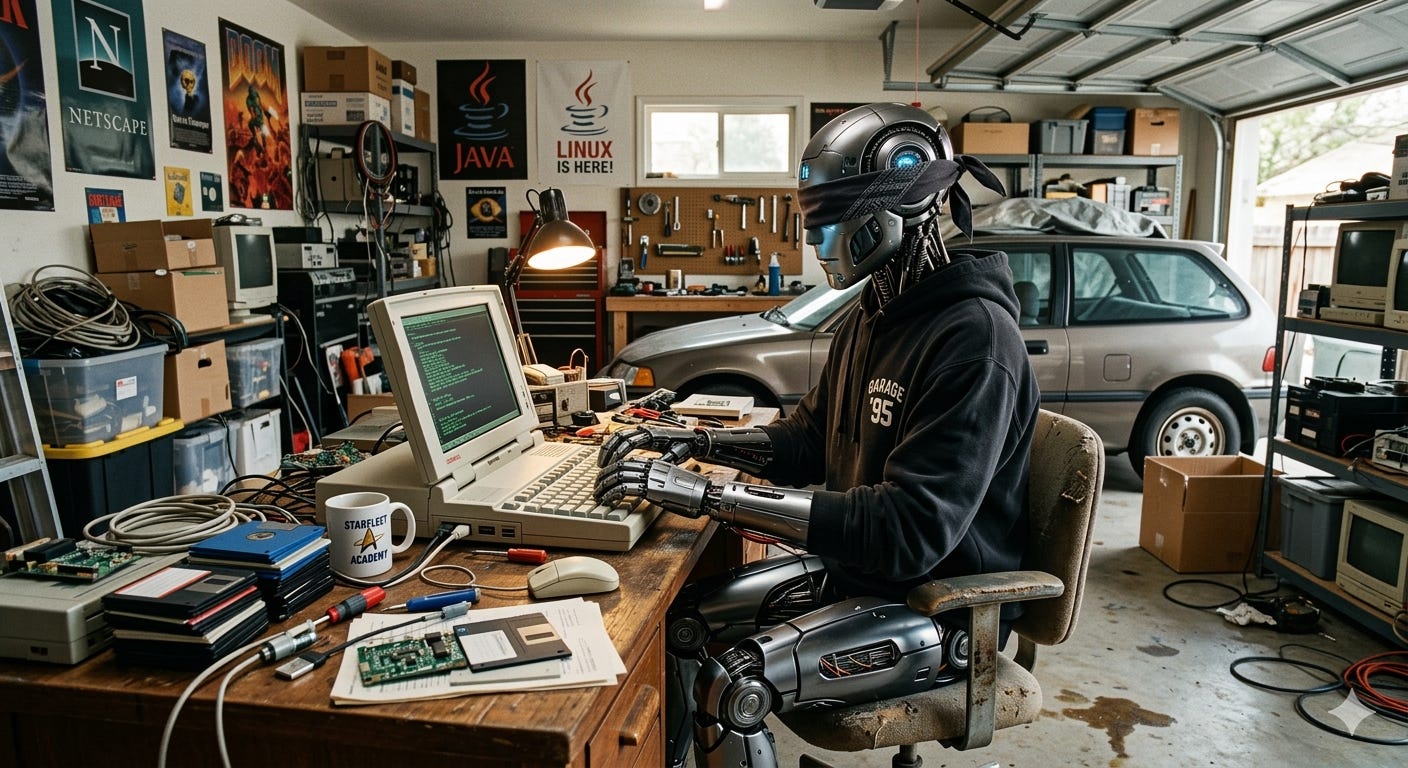
The software industry historically mandated strict protocols to recreate functionality without infringing on copyrights.
Today, developers use AI agents to execute similar rewrites in a fraction of the time. The practice raises immediate questions regarding derivative works and open-source license enforcement.
Licensing and the Open-Source Ecosystem
Open-source software distribution operates primarily under two licensing categories: permissive and copyleft.
Copyleft represents a legal mechanism used within software licensing to mandate that any derivative works or modifications be distributed under the identical terms as the original software. The mechanism prevents proprietary enclosure of open-source projects, keeping the source code accessible for future modification and distribution.
Permissive agreements take a different approach, allowing developers to incorporate open-source code into proprietary applications with minimal restrictions beyond simple attribution.
The GNU General Public License (GPL) stands as a prominent example of a strong copyleft framework, requiring any combined work to inherit its exact licensing terms.
The GNU Lesser General Public License (LGPL) offers a middle ground, applying copyleft rules to the specific library but permitting proprietary applications to link to it dynamically.
On repositories like GitHub, the MIT License remains exceptionally common, offering a highly permissive structure that limits liability without imposing copyleft obligations.
The Apache License 2.0 provides another popular permissive option, distinguished by an explicit grant of patent rights alongside the copyright license.
The intersection of these varied licensing models with artificial intelligence code generation introduces substantial compliance risk for enterprise engineering teams. Counsel must monitor which licenses attach to the codebases ingested or modified by automated tools to prevent unintended intellectual property contamination.
The Historical Standard for Independent Creation
The technology sector has long relied on specific methodologies to recreate software without violating intellectual property protections.
The standard model requires two separate groups of engineers. The first group analyzes the target software to draft a functional specification. The second group, entirely isolated from the first and from the original source code, uses that specification to write new code.
Simon Willison notes, “The most famous version of this pattern is when Compaq created a clean-room clone of the IBM BIOS back in 1982” (Willison).
This method isolates the ideas, which are not copyrightable, from the expression, which is protected. The process guarantees the new code is not a derivative work. In the past, this required immense financial investment and months of labor.
The Chardet Relicensing Discussion
The theoretical debate surrounding AI code generation materialized recently in an open-source conflict. Mark Pilgrim released the initial version of chardet, a character encoding detector, in 2006 under the GNU Lesser General Public License (LGPL). The LGPL allows proprietary software to link to a library, but mandates that modifications to the library itself be released under the same copyleft terms. Dan Blanchard took over maintenance in 2012.
Blanchard recently released version 7.0.0, describing the update as a “Ground-up, MIT-licensed rewrite of chardet. Same package name, same public API — drop-in replacement for chardet 5.x/6.x. Just way faster and more accurate!” (chardet). The MIT license is permissive, carrying no copyleft restrictions.
The shift from the LGPL to the MIT license triggered an immediate response from Mark Pilgrim.
Pilgrim asserted the maintainers lacked the authority to alter the license. He argued, “doing so is an explicit violation of the LGPL. Licensed code, when modified, must be released under the same LGPL license” (Pilgrim).
Pilgrim rejected the premise of an independent rewrite, stating, “Their claim that it is a ‘complete rewrite’ is irrelevant, since they had ample exposure to the originally licensed code (i.e. this is not a ‘clean room’ implementation). Adding a fancy code generator into the mix does not somehow grant them any additional rights” (Pilgrim).
Algorithmic Measurement Versus Procedural Separation
Blanchard defended the relicensing by focusing on the structural differences in the new codebase. He conceded he possessed deep familiarity with the original code, negating the possibility of a traditional procedural separation. He argued the procedural separation is merely a method to prevent the creation of a derivative work.
Blanchard stated, “It is a means to an end, not the end itself. In this case, I can demonstrate that the end result is the same — the new code is structurally independent of the old code — through direct measurement rather than process guarantees alone” (Blanchard).
To support his position, Blanchard utilized JPlag, a source code plagiarism detection tool. JPlag parses source code into syntactic tokens and evaluates them using Greedy String Tiling, ignoring variable names and formatting. The tool measured an average similarity of 0.50% and a maximum similarity of 0.64% between version 1.1 and the new 7.0.0 release (Blanchard).
Blanchard concluded, “No file in the 7.0.0 codebase structurally resembles any file from any prior release... The MIT license applies to it legitimately” (Blanchard).
The Idea-Expression Dichotomy and AI Prompting
The process used to generate the new code introduces specific legal variables. Blanchard operated in an empty repository without access to the old source tree. He instructed the AI model, Claude, not to base its output on LGPL or GPL-licensed code. He provided requirements including public API compatibility and zero runtime dependencies. Blanchard reviewed and iterated upon the generated code.
The application of copyright law to this workflow remains untested. Courts often apply the Abstraction-Filtration-Comparison test to determine non-literal software infringement. This test separates protectable expression from unprotectable ideas, structural necessities, and elements dictated by external factors.
Blanchard essentially relies on the doctrine of idea-expression dichotomy. He argues the underlying concepts of character detection are “well-established techniques described in publicly available research” (Blanchard). He posits that independently reimplementing these ideas does not create a derivative work.
The Training Data Variable
The integration of large language models complicates the analysis of independent creation.
Willison identifies a significant variable concerning the AI model’s training data. He observes, “Claude itself was very likely trained on chardet as part of its enormous quantity of training data—though we have no way of confirming this for sure” (Willison).
For instance, if the AI model ingested the original LGPL code during its training phase, the output could theoretically carry elements of the original expression. The legal community lacks precedent determining if an AI model acts as an independent engineer or as a tool for automated derivation.
Willison asks, “Can a model trained on a codebase produce a morally or legally defensible clean-room implementation?” (Willison). The answer to this question will dictate the viability of AI-assisted code rewriting.
Future Implications for Software Engineering
The chardet conflict operates as an early indicator of broader industry shifts. Willison anticipates these issues will escalate into commercial disputes. He warns, “Once commercial companies see that their closely held IP is under threat I expect we’ll see some well-funded litigation” (Willison).
The cost reduction in generating functional software from test suites or API specifications alters the economic calculus of software development.
The situation prompts deep questions about AI and intellectual property. Quoting developer Armin Ronacher, Willison highlights the long-term uncertainty: “When the cost of generating code goes down that much, and we can re-implement it from test suites alone, what does that mean for the future of software? Will we see a lot of software re-emerging under more permissive licenses?” (Willison, quoting Armin).
Benefits, Challenges, and Risks
The integration of AI coding agents clearly presents distinct advantages for software modernization, primarily through accelerated performance and resource optimization.
For example, the documentation for the newly generated version of the library notes the software is “44x faster than chardet 6.0.0 with mypyc, 31x faster pure Python” (chardet).
These tools allow developers to upgrade legacy systems at a high velocity, bypassing the substantial financial investments and extended timelines traditionally required by isolated engineering processes.
Automated generation provides the capability to rewrite third-party libraries to eliminate unwanted dependencies, allowing teams to integrate software natively into new environments with fewer resource constraints.
This technological shift introduces significant legal, evidentiary, and technical challenges. The judicial system currently lacks established evidentiary metrics for proving structural independence in AI-generated software.
Tools like JPlag provide quantitative data, yet courts must eventually determine whether syntactic token analysis sufficiently proves non-derivation.
Tracing model inputs adds another layer of difficulty; evaluating the influence of an AI model’s training data presents severe technical hurdles. IP owners face high barriers to proving an AI model replicated protected expression rather than merely adopting functional ideas.
Legal professionals must evaluate whether a developer’s historical exposure to a codebase fundamentally prejudices the prompts provided to the model.
These challenges elevate the broader commercial and legal risks for the intellectual property sector. Widespread automated rewriting threatens the enforceability of copyleft licenses, a foundational element the open-source community relies upon to maintain public access to source code.
In the commercial sector, enterprises utilizing AI to replicate competitors’ proprietary software risk severe copyright infringement liability. The presumption of independent creation weakens when developers rely on models potentially trained on protected data.
Finally, organizations incorporating newly relicensed software face substantial supply chain contamination risks. They may incur legal exposure if courts later rule the AI-generated code constitutes an unauthorized derivative work.
Conclusion
The discussion between the original author and the current maintainer of chardet outlines the emerging tension between traditional copyright doctrines and automated code generation.
Developers possess tools capable of replicating complex software functionality in hours. The legal framework must evaluate whether algorithmic generation directed by informed prompts satisfies the standards for independent creation.
Current copyright doctrines face an unprecedented scaling problem. The judicial system is not currently equipped to handle the sheer volume of disputes that automated code generation will produce. Github isn’t prepared, either.
As developers deploy AI tools to replicate complex software functionality in hours rather than months, the frequency of infringement claims could easily overwhelm existing legal frameworks.
The traditional clean room likely requires structural adaptation. Procedural separation of engineering teams is no longer a practical standard when a single developer can direct an AI model to rewrite an entire library.
The standard for independent creation will likely shift from human isolation protocols to algorithmic verification. It’s unclear if Blanchard’s measurement-based approach should be accepted as the new “clean room” standard.
To manage this transition, the software industry may need to establish automated clearinghouses. Specialized AI review agents could be deployed to audit the outputs of AI code generators.
These clearinghouse models would cross-reference generated code against massive databases of licensed software, verifying that the new code does not inappropriately misappropriate protected expression or violate copyleft licenses prior to deployment.
In the era of vibe coding, the math of a plagiarism detector may eventually carry more weight in court than the testimony of a human developer.
Disclaimer: This is provided for informational purposes only and does not constitute legal or financial advice. To the extent there are any opinions in this article, they are the author’s alone and do not represent the beliefs of his firm or clients. The strategies expressed are purely speculation based on publicly available information. The information expressed is subject to change at any time and should be checked for completeness, accuracy and current applicability. For advice, consult a suitably licensed attorney and/or patent professional.